
CASE NOTES
Orf virus in the ears of lambs on the Yorke Peninsula
Jeremy Rogers, PIRSA Senior Veterinary Officer, Bremer Rd, Murray Bridge, SA
Posted Flock and Herd March 2026
Introduction
The orf virus enters the skin via abrasions, cuts or scratches and so could localise in various areas, such as where the skin was punched to insert an ear tag. Where flock vaccination does not occur and there is close contact between stressed young animals, such as at marking / weaning, viruses may spread, especially where there is no or limited immunity.
Lesions on the ears have been reported 1, but they are much less common than lesions on the lips.
History
A producer on the Yorke Peninsula, SA observed some hard lumpy lesions on the ears of his lambs about one month after lamb marking. They appeared to be associated with ear tags. The lumps varied in size on the ears of the lambs, but only on ears that had an ear tag, and they appeared about 1-2 months after lamb marking. The lumps did not seem to distress the lambs. Only a small number of lambs appeared to be affected. The owner thought that they might be scabby mouth (Paramyxovirus / orf) lesions and so submitted photographs to the author. As this case was assessed via a remote consultation, samples were not tested to confirm orf virus infection. The lesions resolved.
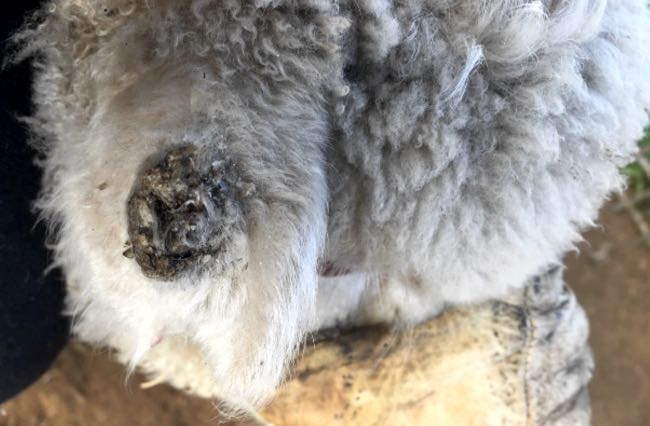
Figure 1. Presumed orf virus on the ear of a lamb post ear tagging
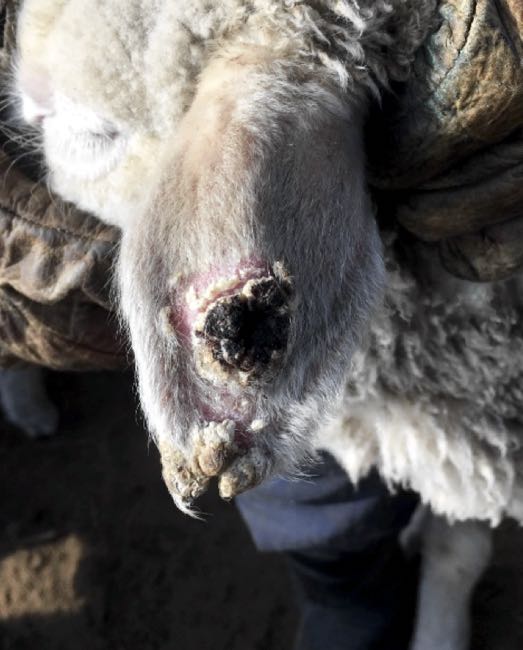
Figure 2. Another affected lamb's ear
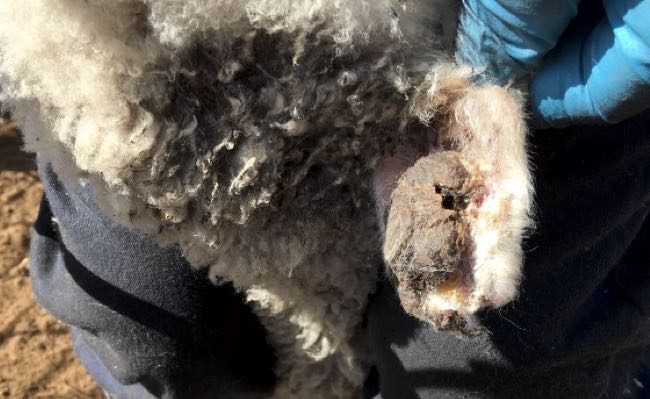
Figure 3. A three cm lesion on the ear of a lamb
Discussion
In this case the scabby mouth lesions were benign and resolved without complication, but the virus can cause lesions around the mouth, lips and feet that may interfere with feeding and growth. A case of severe mastitis associated with scabby mouth lesions on teats of ewes has also been reported. Orf virus (scabby mouth) control was discussed with the owner.
References
- Radostits OM, Gay CC, Blood DC and Hinchcliff KW (2000) Veterinary Medicine. A textbook of the Diseases of Cattle, Sheep, Pigs, Goats and Horses 9th edition, WB Saunders 2000