
CASE NOTES
Acidosis in Dorper ewes on pasture
Judy Ellem and Heidi Austin, North West Local Land Services, Tamworth and Kate New-Tolley Veterinary Student, Charles Sturt University
Posted Flock & Herd May 2016
Introduction
In North West NSW in late April and early May 2015, three cases of lactic acidosis and one suspected case were seen in Dorper ewes on pasture (three in one mob at Narrabri and one at Tamworth) with no history of grain feeding.
Lactic or ruminal acidosis results from the ingestion of feeds rich in readily fermentable carbohydrates (RFCs), particularly those found to contain substantial amounts of oligosaccharides and low physical effective fibre (Bramely et al. 2008). This classically occurs when animals are introduced to grain for the first time without an adaptive phase. Whilst grain-induced acidosis has been widely reviewed, there is limited research of acidosis on pasture, particularly in sheep (Bramely et al. 2008).
The optimal ruminal pH is 6-7, which is influenced by many factors including daily variations, saliva production, feed intake and feed quality. In the case of ingestion of highly digestible pasture, where there are low levels of effective fibre, there is reduced rumination and saliva production. As salivary buffers have been found to neutralise a significant 30-50% of rumen acid (Hernandez et al. 2014) this directly decreases the rumen buffering capacity. The ingestion of highly fermentable feed causes a marked change in the microbial population of the rumen (reduced cellulolytic bacteria, reduced protozoa and increased lactic acid producers- Streptococcus bovis). There is increased volatile fatty acid (VFA) production causing a fall in rumen pH, quickly overtaken by the production of lactic acid (Radostits et al. 2007; Hernandez et al. 2014; Kolver 2002). Lactic acid is ten times stronger than VFA and the rumen pH rapidly falls to 5 or less as the buffering capacity of the rumen cannot keep pace with the organic acid accumulation (Bramely et al. 2008; Nagaraja and Titgemeyert, 2007).
Severe damage to the ruminal lining allows infiltration of bacteria into the portal circulation that can result in liver abscessation and pneumonia (Brameley et al. 2008). The osmolality of the rumen environment increases as water is drawn in from the systemic circulation, causing haemoconcentration and dehydration. Additionally, lactic acid is absorbed by the rumen in quantities that cannot be buffered in the systemic circulation leading to a severe D-lactic acidosis with decreased renal blood flow and glomerular filtration rate, anuria, laminitis, shock and death (Radostitits et al. 2007).
The clinical signs associated with acidosis do not differ substantially between sheep and cattle (RAGFAR, 2007). These are summarised in Radostits et al. 2007 p 314 as “anorexia, depression, dehydration, ruminal stasis, profuse diarrhoea with sweet-sour odour of faeces, weakness and ataxia leading to recumbency”. Teeth grinding was reported in sheep in up to 25% of acidosis cases as well as muscle fasciculation (RAGFAR, 2007).
When grazing, sheep actively select the more digestible parts of plants. They spend less time grazing and more time ruminating compared to cattle. This behaviour is associated with better feed processing (RAGFAR, 2007).
History
The three confirmed cases of lactic acidosis involved two- to three-year-old Dorper ewes at different stages of their reproductive cycle. One ewe had a twin pregnancy, one had just lambed with twins at foot and the other was dry.
The cases occurred in two different mobs in different locations, over a two-week period. The districts had received the first substantial rainfalls for the year in early April, following a dry summer, thus the ewes had access to a highly digestible, new-growth pasture, characterized by high moisture content, high dry matter digestibility, high energy and protein. The Narrabri ewes were grazing river-flat country with emerging clovers/medics, wild turnip and liverseed grass (Figures 1 and 2). The Tamworth ewe was grazing native pasture with substantial dry matter and a green pick underneath.
Vaccination history indicated that all sheep had received an initial course of 5-in-1 but yearly boosters were due. The sheep had been recently drenched. All live ewes were treated with calcium borogluconate 4-in-1 injection, ketol drench and antibiotics prior to being seen by the District Veterinarian (DV).
The owners reported signs occurring over a period of 12 to 24 hours which included depression, dullness, lethargy, inappetance, staggering, apparent blindness and recumbency. In the Narrabri mob, the owner noticed that during mustering some sheep were staggery and some had diarrhea. One was found dead the next day and two were clinically affected. The Tamworth ewe was found recumbent.
Clinical signs and necropsy findings
Presenting clinical signs of the live clinical cases included sternal recumbency with head to the side, reduced response to stimuli (menace and palpebral reflex), increased respiratory rate, open-mouthed breathing with grunting, salivation, diarrhoea, muscle tremors, hindlimb ataxia and dehydration.
All ewes were in good body condition (score 4-5, Figure 3) at post-mortem and had full rumens. It was noted that the ingesta of the Narrabri ewes contained grass seeds and one had a sour odour. The Narrabri cases exhibited severe pulmonary congestion, oedema and atelectasis, livers were grossly mottled, pale and slightly friable, they had reddened abomasal mucosa but no gross changes in the ruminal mucosa. The Tamworth case had a rumen pH of 5 (Combur test strip), blackened, sloughing rumen mucosa with the lining of the reticulum and omasum similarly affected. The liver was pale, yellowish and friable and the kidneys were slightly pale.
The ruminant biochemical profiles were indicative of animals with lacticacidemia, hepatic and renal dysfunction as seen in sheep with experimentally-induced lactic acidosis (Patra et al. 1995). Specific findings relevant to a diagnosis of lactic acidosis are shown in Table 1.
Table 1: D-lactate levels and histopathology findings
| Ewe 1 (Narrabri) | Ewe 2 (Narrabri) | Ewe 3 (Tamworth) | |
|---|---|---|---|
| D-lactate | |||
| Blood(0.0-0.5) | 4.9 | ||
| Aqueous humour (0.0-0.5) | 2.5 | 8.5 | 4.2 |
| Rumen pH | 4.0 | ||
| Histopathology | |||
| Rumen | Non-assessed (NA) | NA | Moderate, superficial rumenitis with intraepithelial micropustules |
| Liver | Moderate acute multifocal periportal necro-suppurative hepatitis | Moderate acute multifocal periportal necro-suppurative hepatitis | Moderate hepatic lipidosis |
| Kidney | No significant findings | No significant findings | Nephropathy, mild acute tubular degeneration with marked macrovesiculate vacuolation of epithelial cells and mild lymphocytic pyelitis |
Discussion
Due to the case history and clinical signs, differential diagnoses included metabolic disease, toxicosis and TSEs. Brains were submitted for TSE exclusion under the National TSE program with a negative result. Metabolic disease was ruled-out on biochemistry; however, the recorded blood biochemical levels for calcium and magnesium could have been misleading due to the prior administration of calcium borogluconate.
Lactic acidosis was initially not considered as a differential diagnosis as there was no history of grain feeding. No grain was seen in the ruminal contents, however, liverseed grass seeds were observed in the ruminal and abomasal contents of both the Narrabri ewes. It is difficult to diagnose ante-mortem due to the non-specific nature of the presenting clinical signs; however, the clinical signs seen in these cases were consistent with other reported cases of clinical acidosis in sheep (Radostits et al. 2007, Patra et al. 1996, Xu and Ding, 2011).
Diagnostic tests that should be considered in cases such as this are blood or aqueous humour D-lactate levels, histopathology of the rumen mucosa and pH of rumen contents (Radostits et al. 2007).
The authors could find no evidence of recorded cases of lactic acidosis in sheep on pasture without the involvement of grain or concentrate feeding. Experimentally-induced acidosis in sheep has been recorded when fed sugar (Haji Hajikolaei et al. 2006) or grains (Patra et al. 1995, Xu and Ding, 2011).
Lactic acidosis in the Tamworth and Narrabri cases was presumed to be associated with ingestion of highly digestible pastures that rapidly ferment in the rumen, as seen in pasture fed dairy cattle (Westwood and Lean, 2001). Grass seed ingestion may also have contributed to the acidosis.
Sheep are selective grazers (RAGFAR, 2007) which may have played a part in the development of the disease, however, it is interesting that Dorpers have been reported as being less selective in their grazing habits than Merinos, utilising greater numbers of plant species including shrubs and bushes (Brand 2000). With respect to breed differences, there is research explaining why arid adapted sheep, such as the Dorper, are better able to utilise low quality forages (Chadwick and Pearce, 2013). In contrast there is very little research on the way in which these breeds digest and utilise high quality pastures under more intensive grazing conditions (Brand 2000).
Investigation into these cases has generated more questions than answers regarding acidosis in sheep on pasture and the differences in feed utilization by Dorpers grazing high quality pastures.
References
- Bramely E, Lean IJ, Fulkerson WJ et al. (2008) The definition of acidosis in dairy herds predominantly fed on pasture and concentrates Journal of Dairy Science 91:308-321
- Brand TS (2000) Grazing behavior and diet selection by Dorper sheep Small Ruminant research 36:147-158
- Chadwick M and Pearce K (2013) Nutritional management of Dorpers for reproduction and growth in Australia: A literature review. MLA, North Sydney
- Haji Hajikolaei MR, Nouri M, Saberi Afshar F & Jafari Dehkordi A (2006) Effects of Experimentally Induced Ruminal Lactic Acidosis on Blood pH, Bicarbonate and pCO2 in the sheep Pakistan Journal of Biological Science 9(10):2003-2005
- Hernandez J, Benedito JL, Abuelo A & Castillo C (2014) Ruminal acidosis in feedlot: from aetiology to prevention The Scientific World Journal 1-8
- Kolver ES, & Veth MJd (2002) Prediction of ruminal pH from pasture-based diets Journal of Dairy Science 85:1255-1266
- Patra RC, Lal SB & Swarup D (1996) Biochemical profile of rumen liquor, blood and urine in experimental acidosis in sheep Small Ruminant Research 19:177-180
- Radostits OM, Gay CC, Hinchcliff KW & Constable PD (2007) Veterinay Medicine A textbook of the diseases of cattle, horses, sheep, pigs, and goats 10th Ed. Saunders Elsevier
- RAGFAR, (2007) Ruminal Acidosis - understandings, prevention and treatment. A review for veterinarians and nutritional professionals. Reference Advisory Group on Fermentative Acidosis of Ruminants, Australia
- Nagaraja TG & Titgemeyert EC (2007) Ruminal acidosis in beef cattle: the current microbiological and nutritional outlook Journal of Dairy Science 90:E17-E38
- Xu Y & Ding Z (2011) Physiological, biochemical and histopathological effects of fermentative acidosis in ruminant production: a minimal review Spanish Journal of Agricultural Research 9:414-422
- Westwood CT and Lean IJ (2001) Nutrition and lameness in pasture-fed dairy cattle Proceedings of the New Zealand Society of Animal Production 61:128-134
For further information contact Judy Ellem, District Veterinarian, North West Local Land Services, Narrabri on (02)67907600 and Heidi Austin, District Veterinarian, North West Local Land Services, Tamworth on (02)57767000.

Figure 1: Pasture grazed by Dorper ewes at Narrabri, similar to Tamworth pasture mix. Photo J Ellem

Figure 2: River flat paddock where ewes grazed at Narrabri. Photo J Ellem
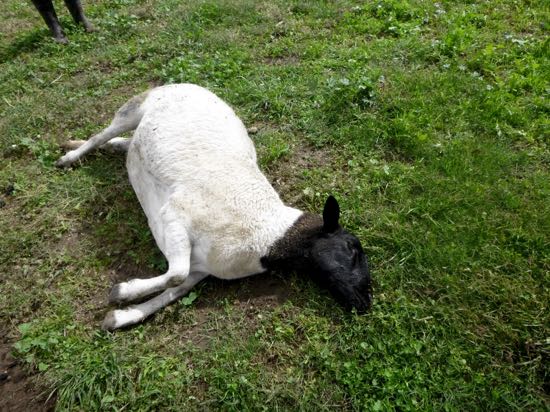
Figure 3: Dead Dorper ewe, note good body condition. Photo J Ellem